
May 20, 2026
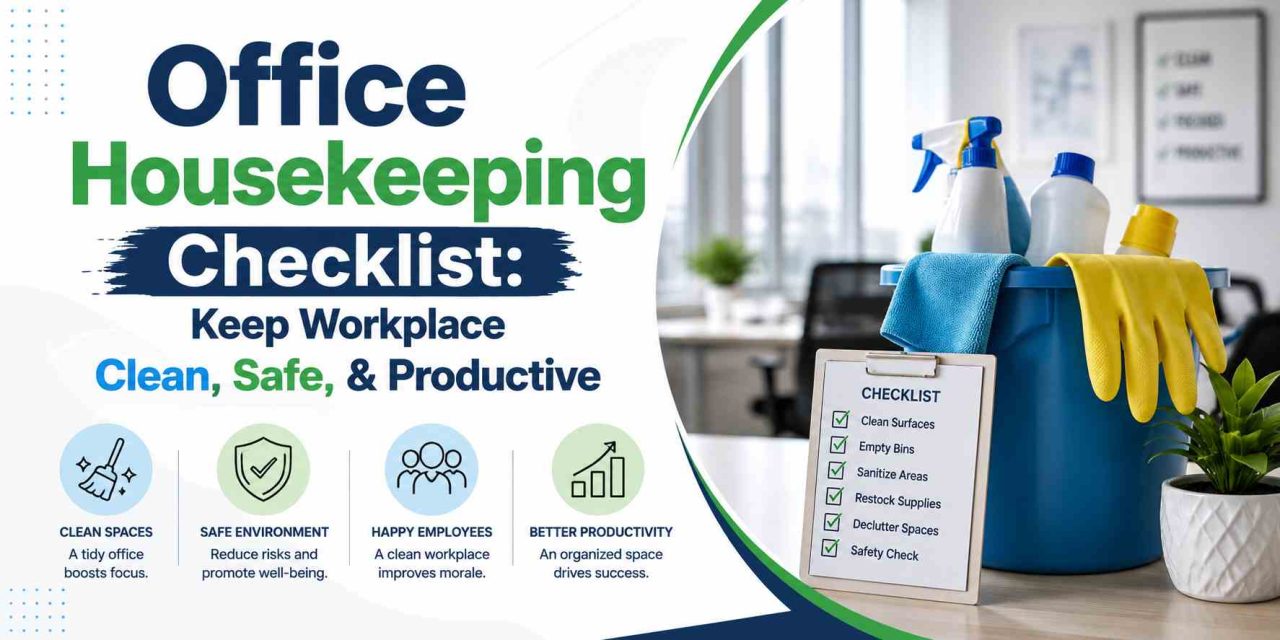
Office Housekeeping Checklist: Keep Workplace Clean, Safe, & Productive
Let’s discuss the office housekeeping checklist in detail.
A tidy, well-organized workplace does more than look professional — it directly influences employee morale, safety, and efficiency. Whether you manage a small startup or a large corporate office, having a solid office housekeeping checklist is one of the simplest yet most impactful things you can do for your team. This guide walks you through what effective office housekeeping looks like, why it matters, and how to build a checklist that actually gets followed.
Why Office Housekeeping Matters
Office housekeeping goes far beyond wiping down desks and emptying bins. It encompasses everything from maintaining clear walkways to managing cables, organizing shared spaces, and ensuring restrooms are hygienic. Neglecting these areas can lead to workplace accidents, increased sick days, lowered staff morale, and even compliance issues with health and safety regulations.
Studies consistently show that cluttered, dirty environments reduce focus and increase stress. On the other hand, clean and organized offices are associated with better productivity, fewer distractions, and a more positive company culture. Simply put, investing in office housekeeping is investing in your people.
Daily Office Housekeeping Tasks
The foundation of any good office housekeeping checklist starts with tasks that need attention every single day. These prevent small messes from becoming bigger problems.
Reception and Common Areas
- Wipe down reception desk and sanitize high-touch surfaces (door handles, light switches, elevator buttons)
- Remove newspapers, outdated materials, or clutter from waiting areas
- Vacuum or sweep entrance mats and lobby floors
- Empty waste bins and replace liners
Workstations and Desks
- Encourage staff to clear their desks at the end of each workday
- Sanitize keyboards, mice, phones, and shared equipment
- Remove dirty cups, plates, or food wrappers
- Check that cables and power strips are tucked away safely
Kitchen and Break Room
- Wash, dry, and put away dishes
- Wipe down countertops, stovetops, and the exterior of appliances
- Empty the dishwasher and run a new cycle if needed
- Take out rubbish and recycling
Restrooms
- Restock soap, paper towels, and toilet paper
- Wipe down sinks, mirrors, and countertops
- Sanitize toilet seats and handles
- Mop floors and refresh air freshener
Weekly Office Housekeeping Tasks
Some areas of office housekeeping don’t need daily attention but should be addressed at least once a week to stay on top of things. Here is the weekly office housekeeping checklist –
- Deep-clean the kitchen, including inside the microwave and refrigerator shelves
- Dust desks, shelves, monitors, window sills, and light fixtures
- Vacuum carpets and mop hard floors throughout the office
- Sanitize shared meeting room tables, chairs, and AV equipment
- Check storage areas and filing cabinets — remove anything that no longer belongs
- Inspect fire exits and walkways for obstructions
- Remove old notices from bulletin boards and replace with current information
- Wipe down glass partitions, windows, and doors
Monthly Office Housekeeping Tasks
Monthly tasks address the kinds of maintenance that are easy to overlook but add up over time.
- Clean behind and underneath furniture
- Inspect ceiling tiles, vents, and air conditioning filters for dust buildup
- Declutter supply rooms and restock as needed
- Check and dispose of expired food items in the kitchen
- Review and update the office housekeeping checklist itself — are there tasks being skipped or areas being missed?
- Test smoke alarms and fire extinguishers
- Audit cable management — bundle and label loose wires
Assigning Responsibility
An office housekeeping checklist only works if people know who is responsible for each item. For professional cleaning tasks, you may hire a commercial cleaning company to handle daily and weekly tasks. However, individual employees should still take ownership of their own workstations and shared spaces.
Consider appointing a weekly “office champion” from your team to do a quick walkthrough and flag anything that needs attention. This distributes responsibility and keeps everyone accountable without placing the burden on a single person.
Posting the checklist in visible areas — the kitchen, restrooms, and near the printer — serves as a gentle, consistent reminder. Digital versions shared via internal tools or workplace apps can also help teams stay on track.
Read Related – How to Sanitize Home? – Guide for a Healthier Living Space
Making Office Housekeeping a Culture, Not a Chore
The most successful offices treat housekeeping not as a burden, but as a shared value. When leadership models tidy behavior — clearing meeting room tables after use, wiping up spills promptly, keeping their own desks organized — it sets the tone for everyone else.
Regular communication about why cleanliness matters (health, safety, professionalism) helps employees understand the bigger picture rather than seeing tasks as arbitrary rules. Recognizing teams or individuals who consistently maintain their spaces can further reinforce positive habits.
Conclusion
A well-structured office housekeeping checklist is one of the most practical tools any organization can put in place. By breaking tasks into daily, weekly, and monthly categories, assigning clear ownership, and building a culture where cleanliness is valued, you create a workplace that is safer, healthier, and more pleasant for everyone. Start with the basics, stay consistent, and review your checklist regularly to ensure it continues to meet the evolving needs of your office.